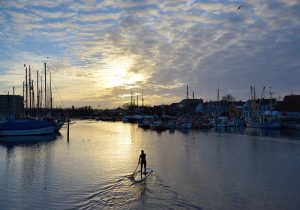
Changing tides. Women in traditional Föhr costumes.
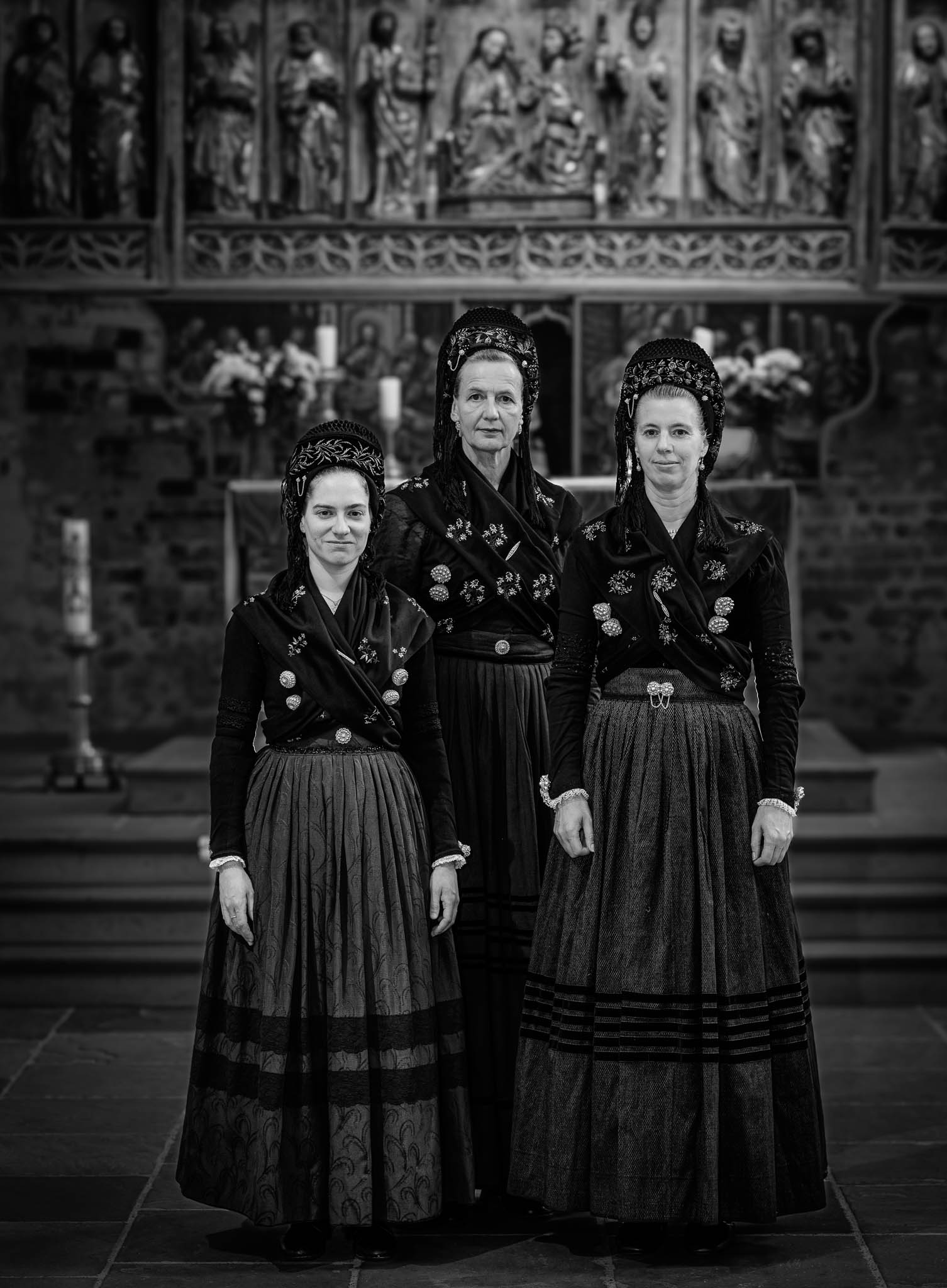
Three women stand before the altar of the Frisian cathedral of St. John in Nieblum, dressed in the traditional church attire of Föhr: Mareike Böhmer, Helga Wögens, and Kerstin Christiansen. Their posture is dignified, every detail is precise, and the sacred space acts as a timeless backdrop.
But the apparent severity is deceptive: A gentle smile breaks the scene, revealing that this tradition is not a museum piece, but a living tradition. The Utersum folk costume group has preserved these garments for generations and recreates them as needed, based on historical models – ensuring that the traditional dress is not only preserved but can also be worn in the future.
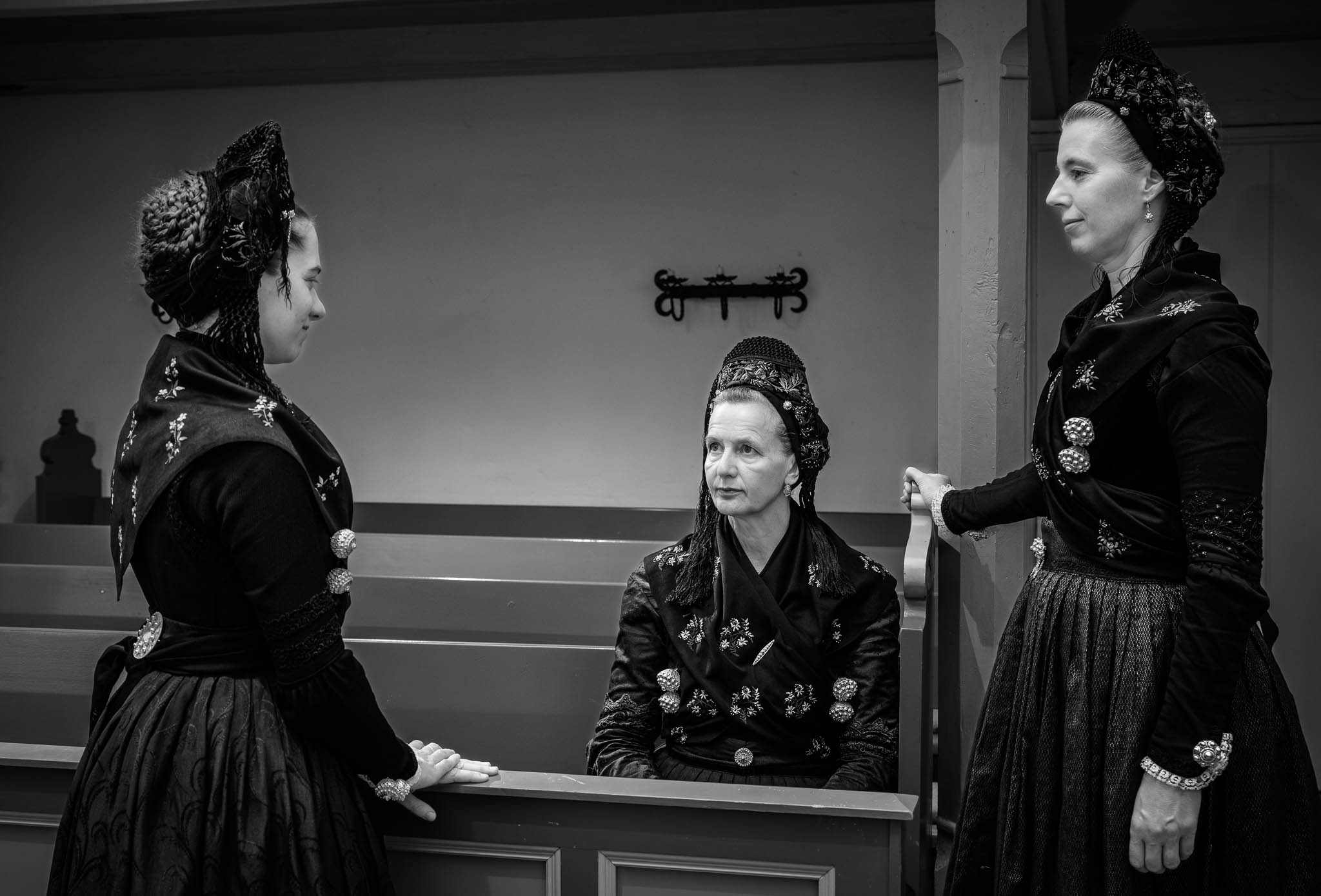
Traditional costumes as historical artifacts
The historical women's costumes, in their present form, date back approximately 150 years. They are closely linked to the whaling era – a period in which seafaring, crafts, and newfound prosperity shaped the culture of the Frisian islanders. Passed down through families, these costumes became textile testimonies to the eventful history of the west coast.
Today, dedicated communities like the Utersum traditional costume group cherish these treasures, recreate them, and present them on special occasions. Every embroidery, every fold, and every silver button tells of this unbroken tradition.
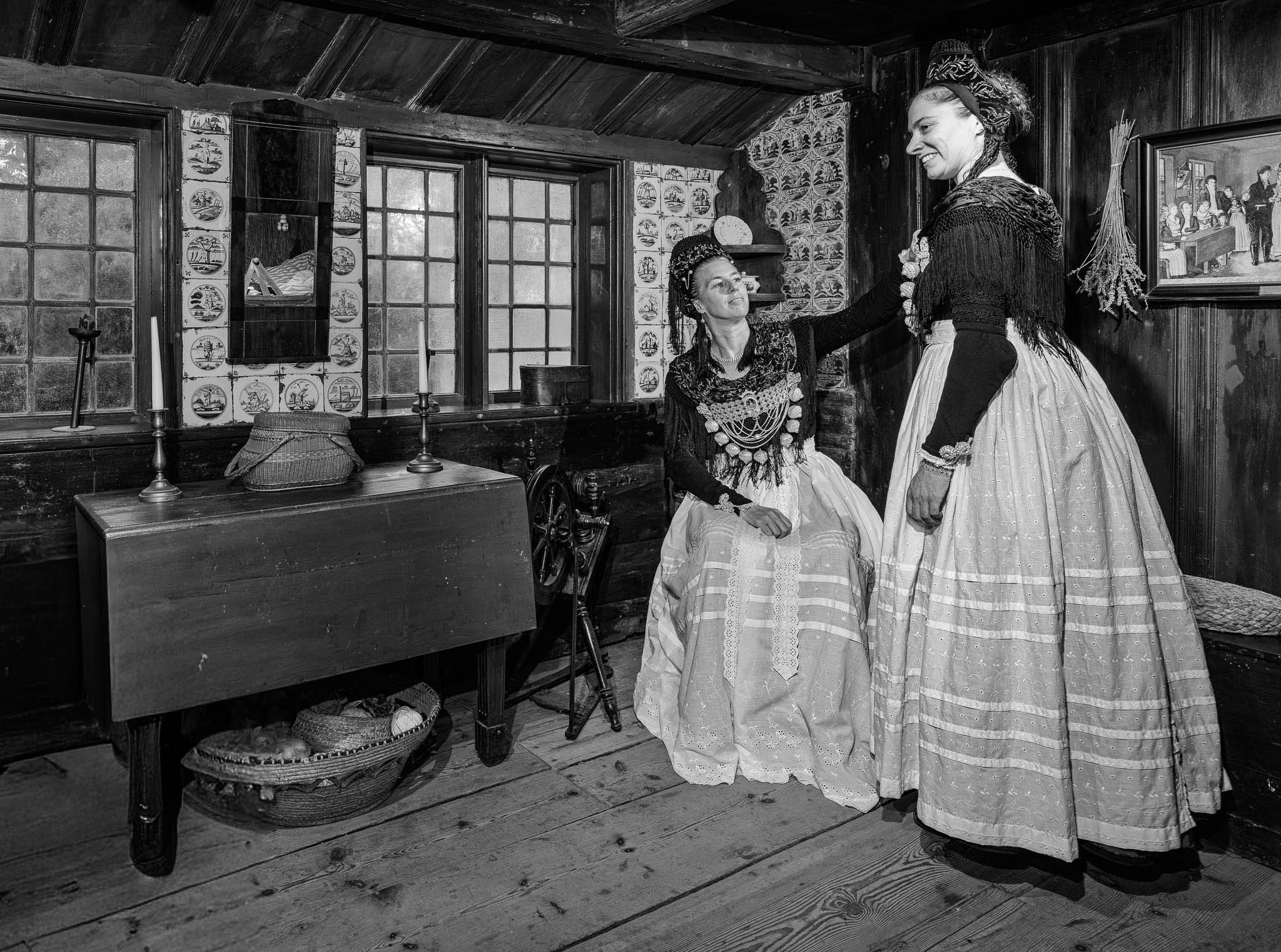
The historic parlor of the Frisian Museum in Wyk demonstrates how closely everyday life and festivities were intertwined on Föhr. Between dark wood paneling and painted tiles, the festive attire unfolds its full effect in the subdued light. In this historically rich setting, Kerstin Christiansen and Mareike Böhmer present the intricately detailed clothing that was once worn only on major holidays. The scene resembles a painting from another era – yet it feels present because people continue this tradition today with the same dignity.
Silver jewelry as a family heirloom
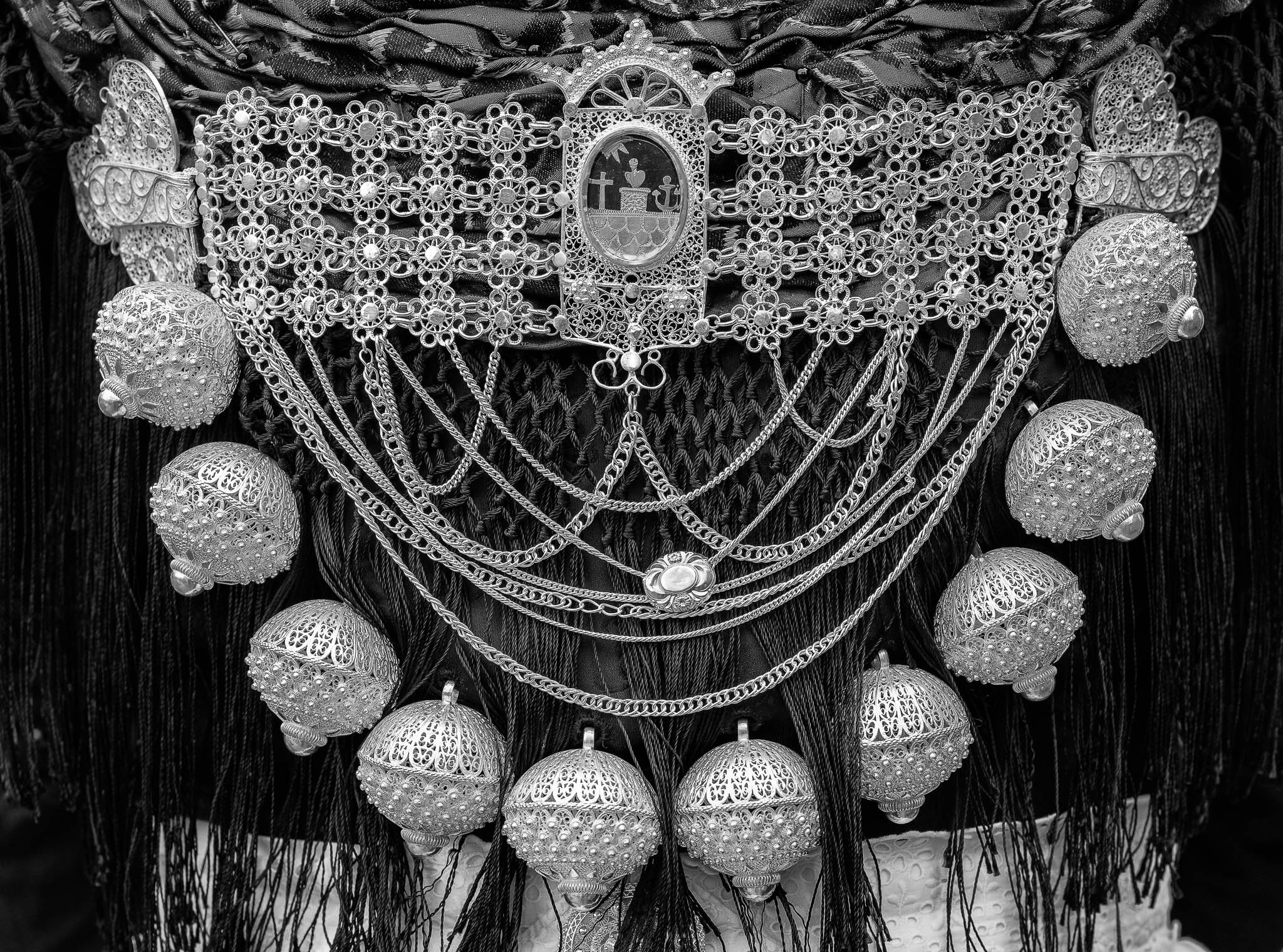
The centerpiece of the festive attire is the delicate silver breast ornament, a precious family heirloom dating from between 1870 and 1900. This masterful piece depicts the classic symbols of seafaring – faith, love, and hope – framed by silver buttons arranged in a semicircle. In Kerstin Christiansen's family, this treasure has been passed down for generations. It is far more than a historical object – it is a symbol of Frisian identity and a tangible piece of island history.
The “talking stones” of Nieblum
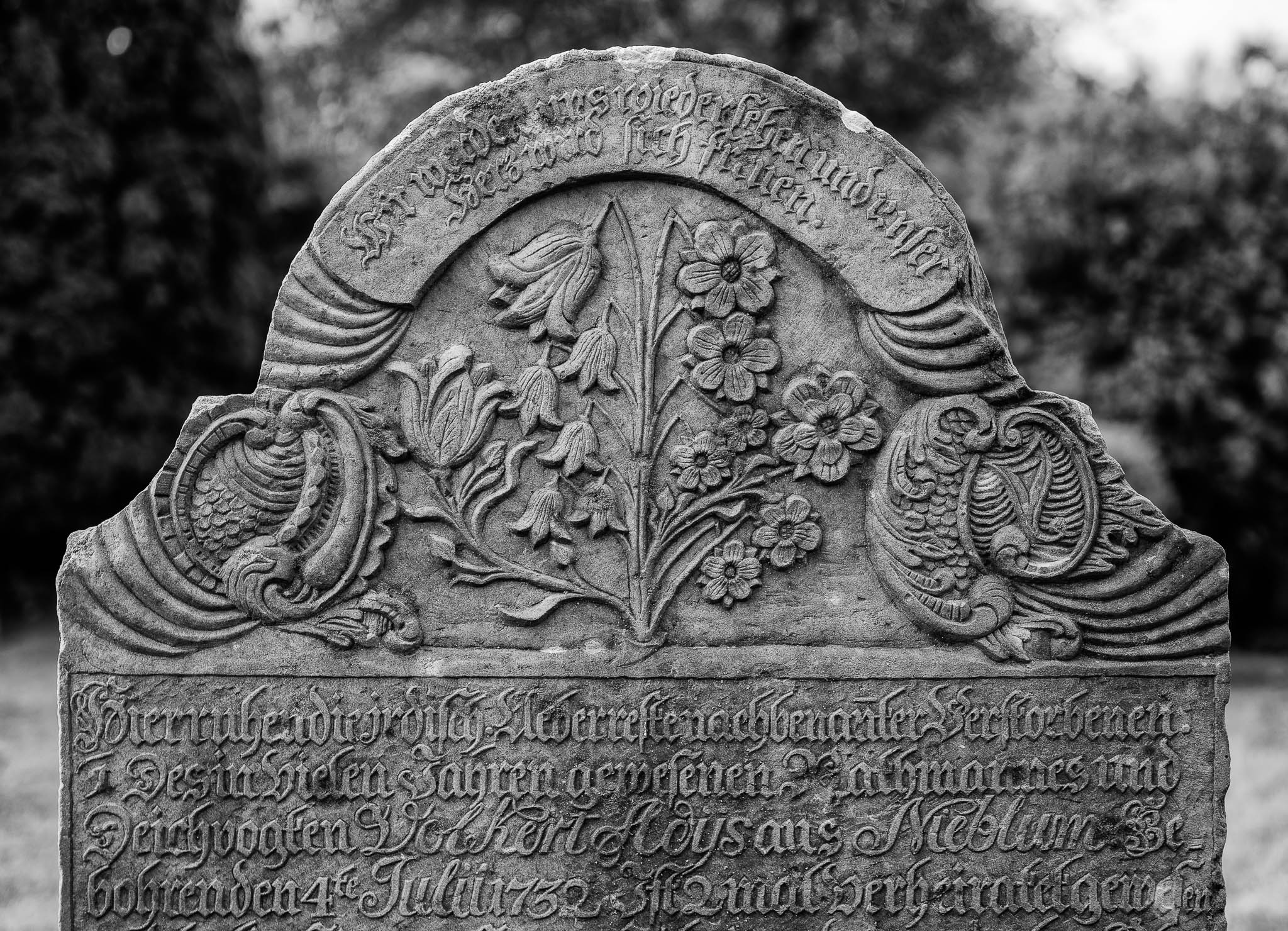
That Föhr's cultural richness extends far beyond clothing is evident from a visit to the St. Johannis cemetery in Nieblum. The artfully sculpted gravestones – the "talking stones" – recount entire lives and seafaring adventures through ornaments, floral patterns, and flowing inscriptions. They stand as stone witnesses to the prosperity of the whaling era and keep the memory of centuries past alive. Their symbolism reflects the same design aspirations that lend Föhr's traditional costumes their timeless elegance.
Exhibition from October 28th
The images shown here are part of the exhibition Tidal changeslThe exhibition, which opens on October 28th, presents the lifestyles of the West Coast and the Wadden Sea within a broad visual context. Traditional costumes are shown as a cultural facet alongside landscape and work, bearing witness to a rich history. The exhibition is curated by a picture book published by Wachholtz Verlag.
Living tradition
The work of Utersum traditional costume group It brings together all these threads – craftsmanship, clothing, memory, and identity. It makes visible what has shaped the island of Föhr over the centuries and shows that tradition is not a backward-looking perspective, but a living expression of the present. In the silence of the church, in the intimacy of the parlor, and in the togetherness of the community, this heritage is preserved: quietly, with focus, and with great care.
Newsletter
Receive new posts about projects, photographic techniques and exhibitions via email: Subscribe here