Tidal changes. Paths through the mudflats.
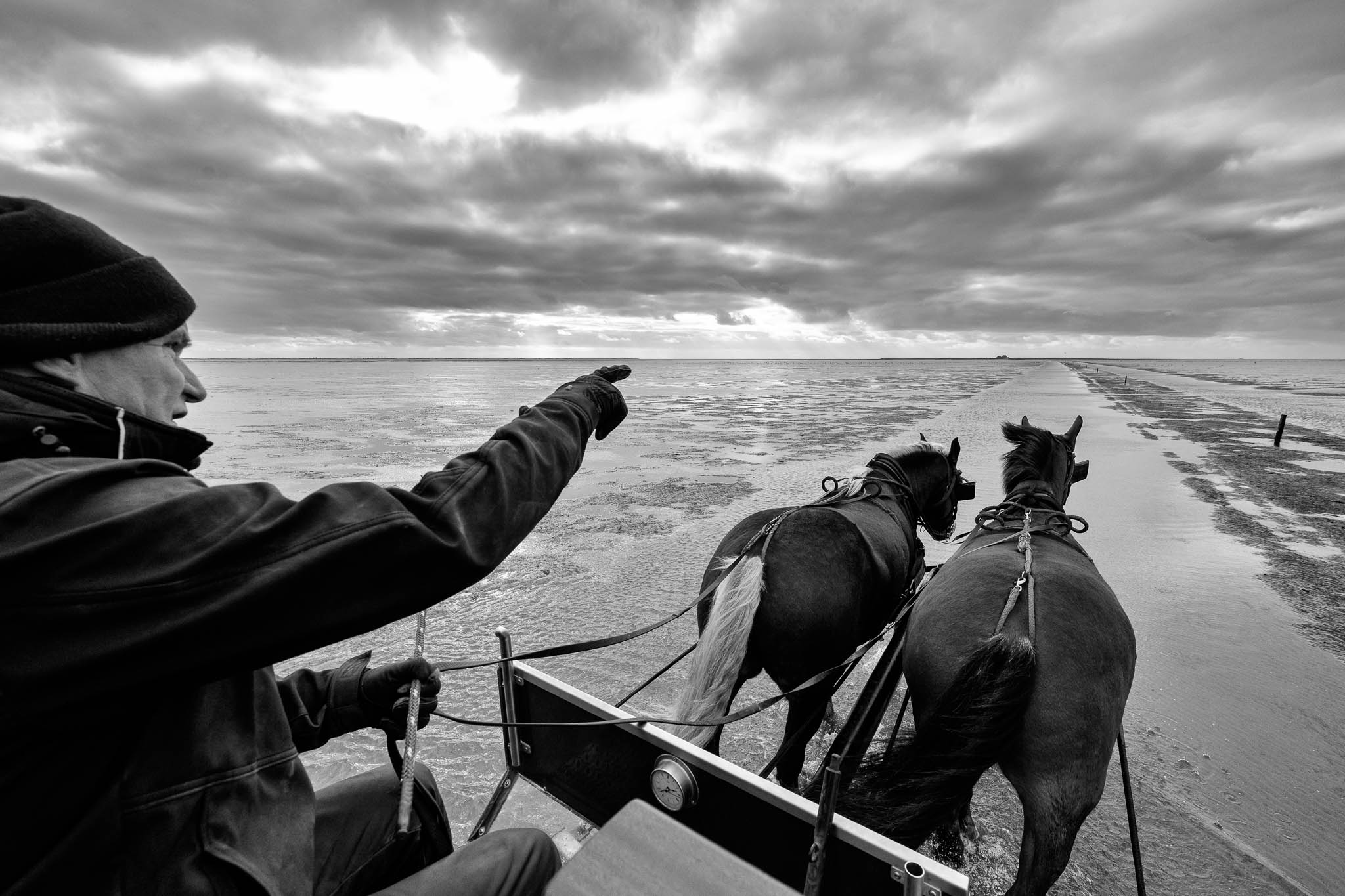
The paths in the Wadden Sea change with water level, wind, and season. They only survive because people use them daily, monitor them, and maintain them. Between the Hallig islands and the mainland lie routes that simultaneously serve as commutes, supply routes, and connections to the outside world.
The carriage to Südfall
Every year, from April to October, Holger Hansen and his team take guests from Nordstrand to Südfall. The seven-kilometer route is marked with stakes placed at wide intervals in the mudflats, indicating the direction – a guide that remains visible only at low tide.
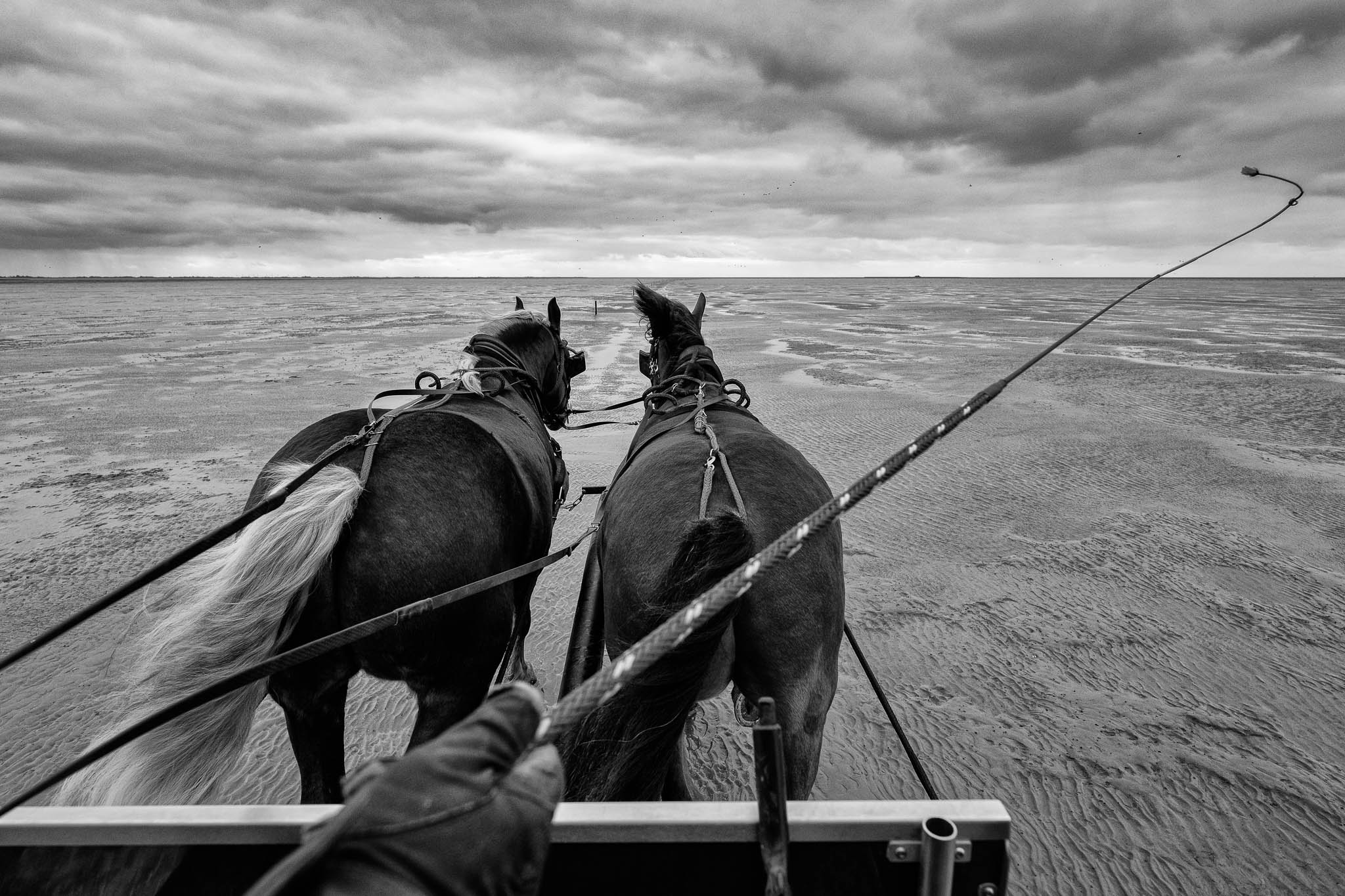
As the carriage begins to move, the surroundings change noticeably: the sounds become muffled, the horizon expands, and the journey takes on a unique tranquility. Step by step, the horses enter the shallow water, and the carriage follows a path that, despite its markings, demands attention and experience.
Südfall is inhabited only in summer, and the horse-drawn carriage is the only scheduled connection between the Hallig (small island) and the mainland. Access on foot is permitted only as part of authorized, guided mudflat hikes, as Südfall lies within the strictly protected Zone 1 of the national park. At unfavorable tide levels, the Hallig becomes completely isolated.
The Oland–Langeneß narrow-gauge railway – a lifeline in the Wadden Sea
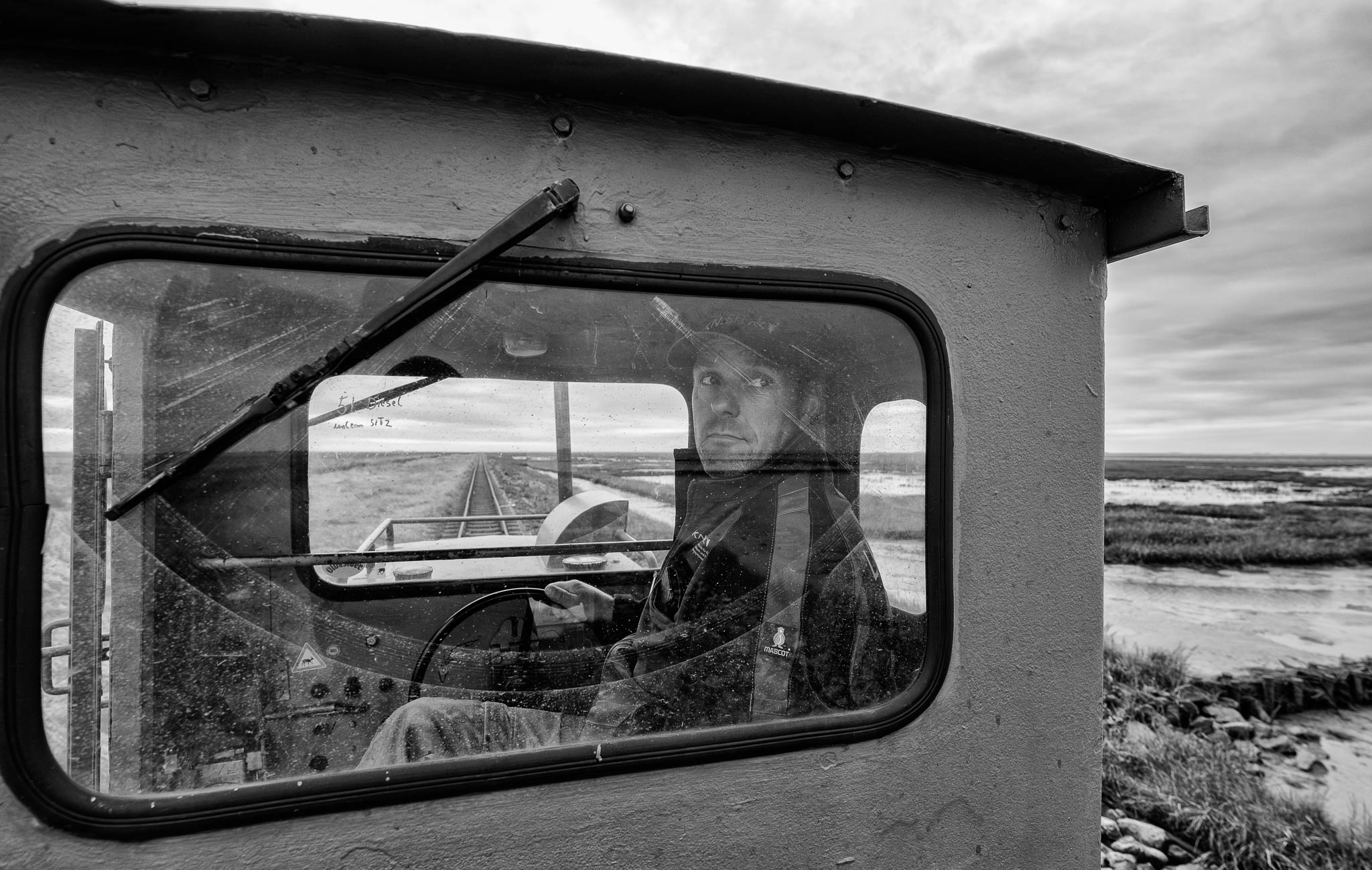
The railway line between Dagebüll and the Hallig islands of Oland and Langeneß was built in the 1920s and remains a vital link in the Wadden Sea. When Thies Nissen starts the locomotive, the small engine slowly begins to move across the single-track causeway.
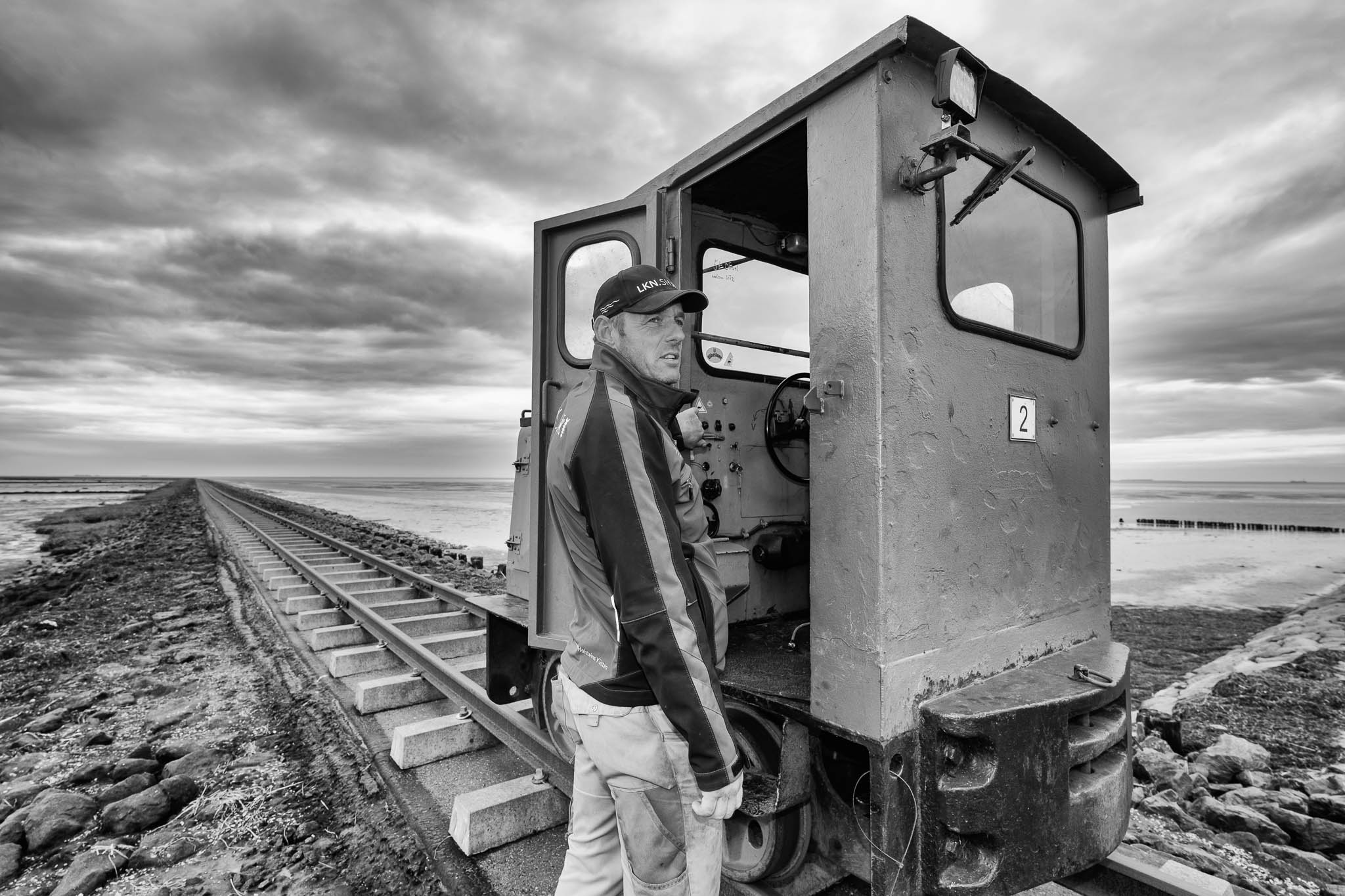
For LKN.SH, the Schleswig-Holstein State Agency for Coastal Protection, National Park and Marine Conservation, he and his team transport materials and personnel from the depot in Dagebüll to the coastal protection construction sites in the Wadden Sea or on the Hallig islands.
Together they keep the route open even on days when water levels and weather leave little room for maneuver. However, in extreme conditions – such as flooding or heavy ice floes – railcar rides are not possible.
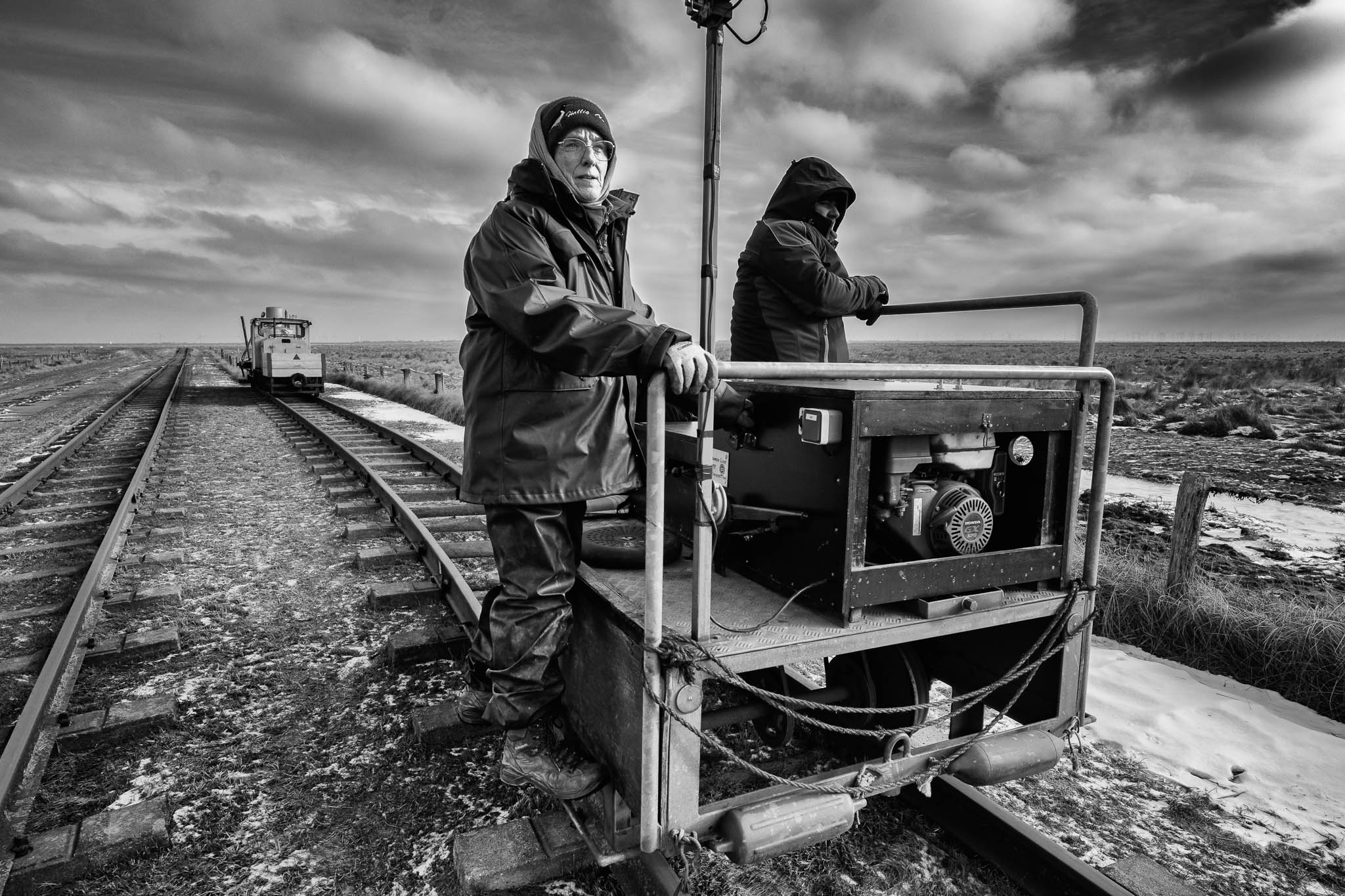
The islanders also use the tracks with their own railcars. They do their shopping, pick up guests, and manage their daily journeys across the mudflats.
Pastor Matthias Krämer on Langeneß
Since 1994, Pastor Matthias Krämer has served the congregations on Langeneß, Oland, and Gröde. His small boat makes pastoral care possible in the Wadden Sea – as long as wind and water conditions permit. For church services, visits, and conversations, he travels along the same narrow dikes that shape the daily lives of the islanders.
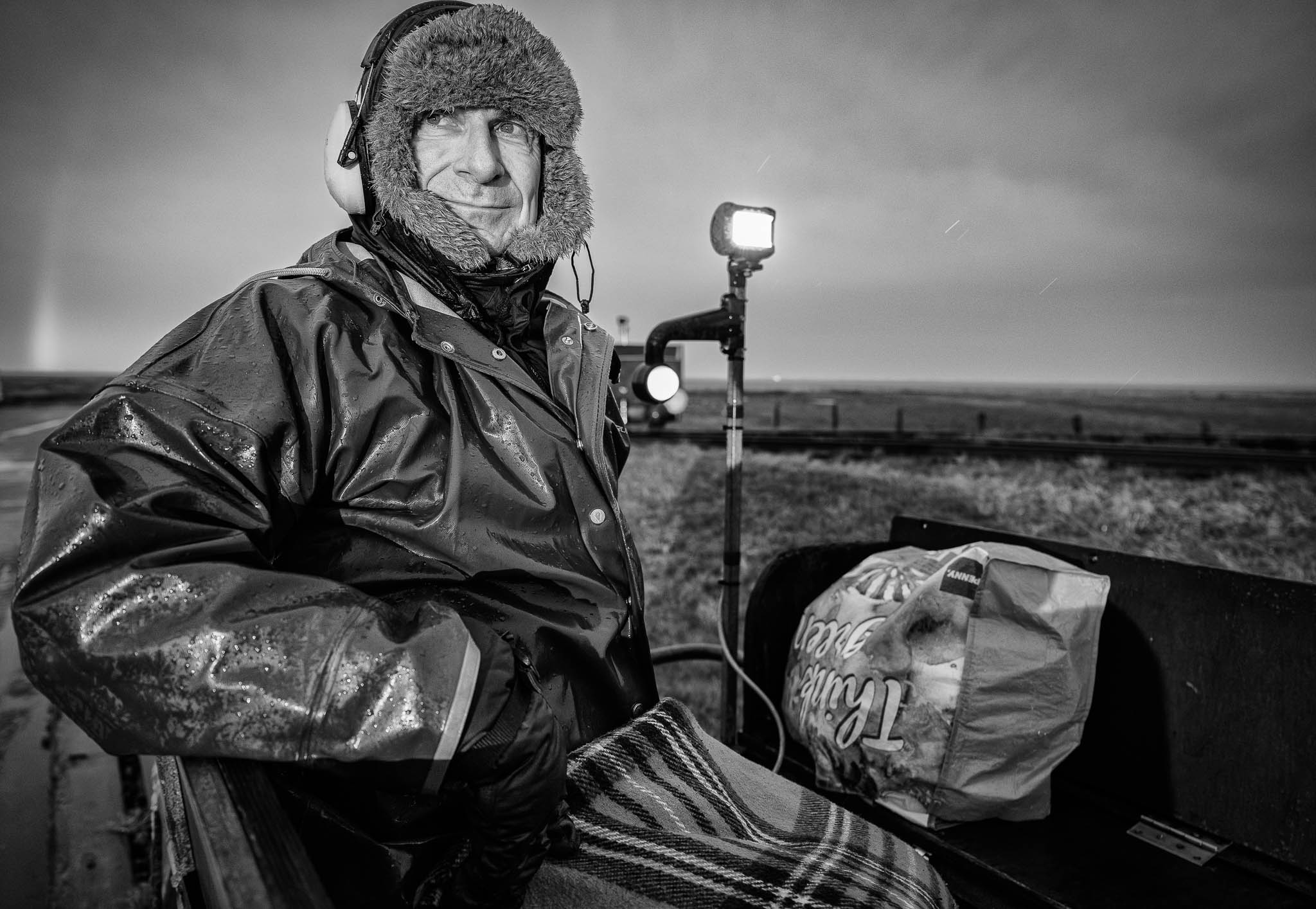
During floods or storm surges, the rectory on Langeneß remains an island in a double sense: then it is not possible to leave the terp.
Tidal change – people in the Wadden Sea
The motifs in this article are part of the photographic epic. tide about people in the Wadden Sea – about their lives and work in a landscape shaped by the forces of nature and the changes resulting from climate change.
The exhibition will open on October 28, 2026 in the nos.PHOTOMENTA The North-Baltic Sea Savings Bank in Schleswig is opening the new branch. A companion volume will be published simultaneously by Wachholtz Verlag.
Newsletter
Receive new posts about projects, photographic techniques and exhibitions via email: Subscribe here


